Why This Decision Needs a Framework, Not Instinct
Left to individual judgment, this decision tends to default to habit rather than analysis — some staff appeal almost everything regardless of likely outcome, others write off anything that looks time-consuming. Neither extreme is efficient, and a simple, consistent framework produces better aggregate results than either default.
The Two Variables That Actually Matter
At minimum, the decision should weigh two things: the dollar value of the claim, and the estimated likelihood of a successful appeal given the denial reason (some denial categories, like clear timely filing misses, have low appeal success likelihood regardless of value; others, like documentation-gap denials, tend to have high success likelihood if the missing documentation exists).
A Simple Decision Grid
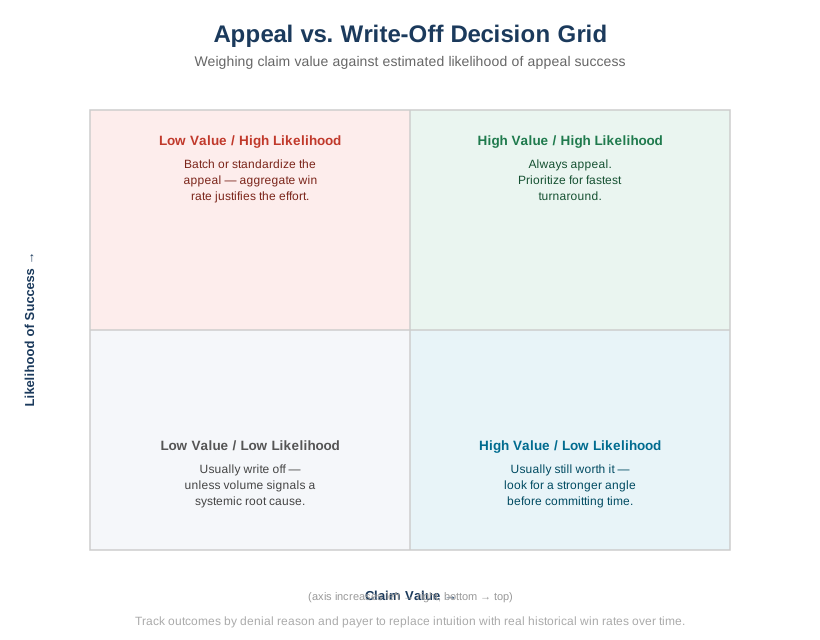
High value, high likelihood of success: always appeal, and prioritize these for fastest turnaround. High value, lower likelihood: usually still worth appealing given the dollar value, but worth a second look at whether there's a stronger angle before committing significant staff time. Low value, high likelihood: worth appealing in batches or through a lower-effort standardized process, since the win rate justifies the aggregate effort even if any single claim wouldn't. Low value, low likelihood: often the right call to write off, unless the volume of similar denials suggests a systemic issue worth addressing at the root cause rather than claim by claim.
Building Likelihood Estimates From Your Own Data
Over time, tracking outcomes by denial reason and payer lets a team replace rough intuition about 'likelihood of success' with actual historical win rates — turning this from a subjective judgment call into a data-informed one that gets more accurate the more denials the team processes.
ResolveRCM tracks outcomes by denial reason and payer automatically, helping teams base the appeal-vs-write-off decision on real historical data. Learn more. |